
Climate change and antimicrobial resistance are often discussed as separate global health crises. Increasingly, though, it is becoming clear that they are connected.
A recent study in The Lancet Planetary Health provides important supportive evidence. Using almost 240,000 Salmonella genomes collected globally over several decades, the authors examined whether climate variables, including temperature and precipitation, were associated with the abundance of antimicrobial resistance genes. As an ecological study, it shows association rather than a direct causal pathway. Even so, the findings suggest that changes in climate are associated with increases in the abundance of resistance genes in Salmonella organisms, and that future warming could further intensify this trend unless paired with strong climate mitigation measures and antimicrobial stewardship.
The authors focused on non-typhoidal Salmonella, which can circulate through humans, animals, food systems, and the environment. Typhoidal Salmonella were excluded because they are human-restricted pathogens with different ecology and transmission patterns. This analysis still has important implications for how we think about typhoid, invasive non-typhoidal Salmonella (iNTS) disease, and vaccine decision-making in a changing climate.
Climate change and iNTS
Non-typhoidal Salmonella spp. are a major cause of diarrheal disease globally and can also cause severe invasive disease, particularly among young children, people living with HIV, and other vulnerable populations. According to the Global Burden of Disease study (IHME), invasive non-typhoidal Salmonella disease was estimated to cause 605,000 cases, more than 76,000 deaths, and 6.11 million DALYs globally in 2023, with an estimated all-age case fatality ratio of 14.5% and substantially higher estimates among people living with HIV. The burden is highest in sub-Saharan Africa and among children younger than 5 years. iNTS vaccines are currently in development and could become an important new tool for preventing severe invasive disease. Because non-typhoidal Salmonella organisms can move across animal, human, food, and environmental reservoirs, they are particularly relevant to discussions about climate change and drug resistance.
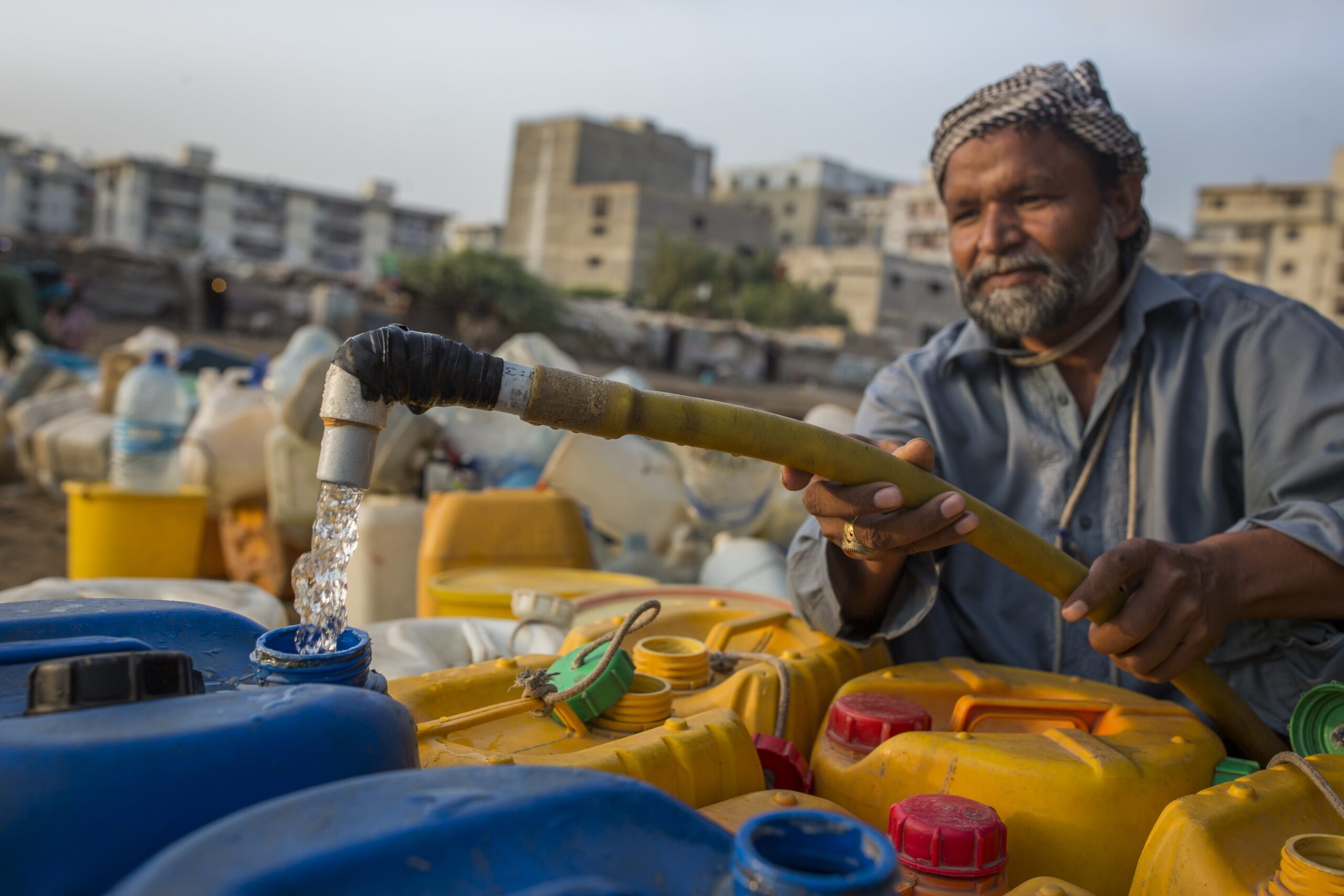
Photo: A man fills containers with water in Karachi, Pakistan. Climate change is creating conditions in which enteric infections may spread more easily, heightening the need for safe water infrastructure. Credit: TyVAC/Asim Hafeez.
Climate change and typhoid
Salmonella Typhi spreads between humans, most often through contaminated food and water, but many of the same climate-related mechanisms discussed in the study’s broader context are relevant. These pressures can create conditions in which enteric infections may spread more easily, leading to more frequent use of antibiotics.
Policy implications
This study provides another reason to think about climate, drug resistance, and enteric disease prevention as interrelated. The study’s findings also reinforce something that policymakers already know from experience: risk is not evenly distributed. Some communities already experience more frequent floods, heat extremes, water insecurity, or disruptions to sanitation infrastructure. These are also often the communities with the fewest resources to respond, the weakest surveillance systems, and the greatest burden of infectious diseases.
For typhoid vaccine policy, this matters. WHO recommends typhoid conjugate vaccine (TCV) introduction in countries with a high incidence of typhoid disease or a high burden of antimicrobial-resistant S. Typhi or high case fatality ratio. As countries consider where and how to introduce or prioritize TCVs, climate vulnerability may become an increasingly important consideration, particularly because TCVs prevent typhoid infections and reduce the need for antibiotics, helping slow the emergence and spread of drug-resistant typhoid.
This does not necessarily mean every country needs the same approach. In some settings, nationwide TCV introduction may be appropriate. In others, policymakers may need to think carefully about subnational prioritization: urban informal settlements with fragile water and sanitation systems, areas prone to flooding, districts already seeing changes in enteric fever patterns, or places where drug-resistant typhoid is emerging alongside climate-related stressors.
The same principle applies to surveillance. If climate extremes are changing the risk landscape for Salmonella infections, then surveillance systems need to be able to detect those changes. That means linking blood culture surveillance with information on antimicrobial resistance, vaccination coverage, water and sanitation conditions, and climate-related events. Genomic surveillance can be especially valuable where capacity exists, but longitudinal routine blood culture and antimicrobial susceptibility data can also help decision-makers understand where risk is increasing.
Decisions today impact tomorrow
The practical question for policymakers is not only, “Where is typhoid incidence highest today?” It is also, “Where will populations be most vulnerable tomorrow?” Answering that fully will require better data, but countries do not need to wait for perfect evidence before acting. As a first step, they can look for places where typhoid risk, drug resistance, weak water and sanitation systems, and climate vulnerability overlap, and use that information to guide vaccine planning, surveillance, and prevention — because the future burden of Salmonella infections will be shaped in part by the conditions in which people live.
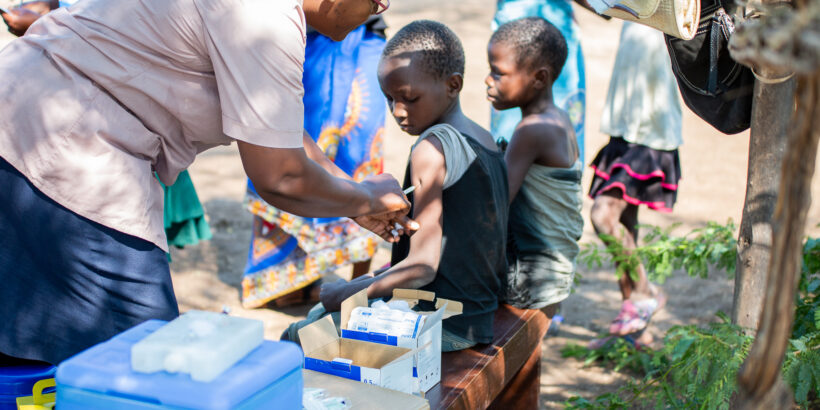
Cover photo: A vaccinator in Malawi delivers typhoid conjugate vaccine (TCV) during the country’s TCV introduction campaign in 2023. The campaign occurred shortly after Cyclone Freddy, which damaged infrastructure and overwhelmed sewage systems. The Government of Malawi and partners moved forward with the TCV campaign, recognizing the urgency to protect children against typhoid, particularly in the wake of a damaging cyclone. Credit: TyVAC/Madalitso Mvula.