Pour lire ce blog en français, veuillez cliquer ici.
This blog highlights research made possible through the collaboration of researchers, surgeons, and partners at Hôpital de la SIM in Galmi, Niger. We extend our thanks to the many collaborators who contributed to this work.
Typhoid intestinal perforation (TIP) is one of the most severe complications from typhoid. TIP, which disproportionately affects children and adolescents, occurs when typhoid infection leads to intestinal perforation (a hole in the wall of the gastrointestinal tract), a life-threatening complication that requires emergent surgical treatment. TIP has a high mortality rate, and it often imposes catastrophic financial costs on families.
Although TIP is preventable, it continues to cause substantial illness, disability, and death among children in many typhoid-endemic settings, particularly in sub-Saharan Africa. Blood culture diagnosis is often unavailable in high-burden areas, meaning many cases go undiagnosed or are only identified as typhoid once TIP occurs.
Researchers recently shared a review article and results from a prospective hospital-based study that explore how TIP can serve as an indicator of typhoid burden. The findings suggest that in high-burden settings, TIP surveillance may provide valuable data on typhoid burden that can help make the case for typhoid conjugate vaccine (TCV) introduction where other burden data indicators may be lacking.
TIP as a marker of disease burden in Niger
In the hospital-based study, researchers collected data on typhoid and TIP in children who underwent abdominal surgery at a hospital in rural Niger. More than 80 percent of patients enrolled in the study met the criteria for typhoid-related disease, and TIP accounted for the vast majority of pediatric surgical abdominal emergencies. Many patients experienced surgical complications or required reoperation, and the mortality rate was 20.5 percent.
These findings suggest that TIP is a major and under-recognized contributor to illness and death among children in Niger. They also suggest that surgical data can provide evidence on typhoid burden when routine laboratory surveillance is unavailable. Because blood culture diagnosis requires specialized equipment, trained personnel, and laboratory capacity, it remains unavailable in many low-resource and high-burden settings. In the absence of blood culture surveillance, TIP data can help policymakers understand typhoid burden and potentially support decision-making on typhoid prevention and control strategies.
Importantly, TIP data informed the decision to introduce TCV in Niger, and the country conducted an introductory campaign in December 2025. TCV is now available as part of the routine immunization schedule.
Preventing TIP with TCVs and other interventions
The review article highlights that TIP is a challenge not only in Niger, but in many other typhoid-endemic countries. Drug resistance, particularly the emergence of extensively drug-resistant (XDR) typhoid, has made treating typhoid more difficult. When effective treatment is delayed or unavailable, typhoid is more likely to progress to severe disease, including intestinal perforation.
Many children with TIP require long hospital stays, and families frequently face catastrophic health expenditures for treatment—often nearly a year’s worth of income. TIP’s high mortality rate, the burden it imposes on communities, and its link to drug resistance all point to the urgency of preventing typhoid in high-burden settings.
In many communities, TIP cases are more reliably documented than laboratory-confirmed typhoid, meaning that TIP data can provide valuable insights on disease burden and transmission. Integrating these data with other surveillance estimates may help identify high-risk populations, inform targeted TCV introduction strategies, and contribute to a better understanding of typhoid burden.
Improvements in water, sanitation, and hygiene (WASH) are necessary for long-term typhoid control, but developing and maintaining WASH infrastructure requires substantial time and investment. In the near term, TCVs can protect children from typhoid and lower the risk of TIP while WASH improvements are carried out.
The example of Niger, where TIP surveillance helped support TCV introduction, demonstrates how surgical data can help guide prevention efforts when other burden data are limited. Sustaining access to TCV in Niger and other countries is essential to reduce severe typhoid disease and prevent life-threatening complications like TIP.
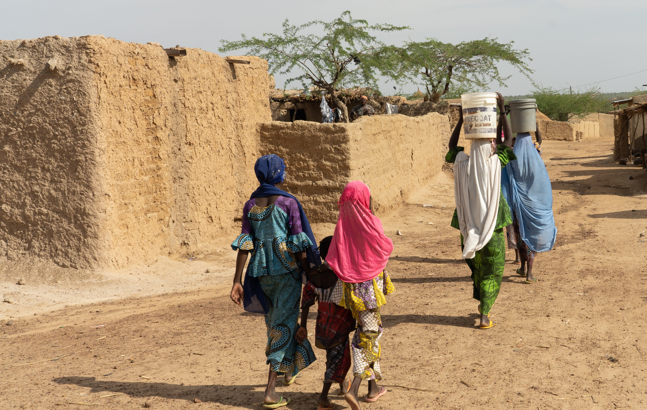
Cover photo: These three girls, and their mothers in front of them, all had emergency surgery for TIP at Hôpital de la SIM Galmi in Niger. They live in the same village about 15 minutes from the hospital. Credit: Alina Farcas.