Pour lire ce blog en français, veuillez cliquer ici.
This month government leaders, scientists, and influential civil society members will convene at the United Nations Climate Change Conference. Discussions will focus broadly on climate action, progress on climate finance, and climate related goals. While these high-level discussions unfold at the global level, low- and middle-income countries continue to feel the heaviest impact of our changing environment.
One topic not on the conference agenda is the emerging linkage between climate change and the spread of drug-resistant pathogens. Although misdiagnosis, overuse, and misuse of antibiotics remain some of the main forces driving drug resistance, climate change can “modify the environmental, ecological, and social conditions” that allow resistance to emerge, persist, and evolve.
Global problem, local impact
The World Health Organization (WHO) estimates that one in six infections is drug resistant. WHO data from 2021 estimate that bacterial drug resistance may have been associated with more than 4.7 million deaths around the world. Drug-resistant typhoid is an increasing problem that contributes to these worrying statistics.
Typhoid can be effectively treated with appropriate antibiotics. However, typhoid bacteria have evolved to survive many of the antibiotics previously used to treat typhoid. The original first-line antibiotics to treat typhoid were chloramphenicol, ampicillin, and cotrimoxazole; however, beginning in the 1970s, strains resistant to these three drugs—multidrug resistance (MDR)—appeared and spread globally. MDR typhoid is prevalent in many parts of Asia and sub-Saharan Africa where typhoid has the largest burden.
Climate change + drug resistance
Clime change is not a direct cause of drug resistance. Yet rising temperatures, extreme weather events, and disruptions to water and sanitation infrastructure create conditions that allow resistant typhoid bacteria (and other resistant microbes) to spread.
A recent article published by Eos highlights how climate-related events can contribute to the spread of disease-causing pathogens, including typhoid. These disruptions can increase contamination of water sources and make it more difficult for communities to access safe water. For example, floods can overwhelm weak water and sanitation infrastructure, contaminating water sources with typhoid and other pathogens. Alternatively, droughts can limit the availability of regular, safe water sources, forcing communities to utilize shallower, warmer, contaminated sources of water. The environmental changes can create conditions that facilitate typhoid transmission.
Additionally, higher temperatures may contribute to the spread of infections, causing more illness and treatment-seeking behavior, which can lead to increased—even overuse—of antibiotics. Many low-resource health facilities lack the appropriate blood culture tools to conduct typhoid diagnosis, meaning that typhoid can go misdiagnosed or mistreated for weeks before proper treatment is given.
Prevention is our strongest defense
The commitments to climate change, reducing carbon outputs, and other solutions will emanate from the global level. At the same time, preventing infections at the national level is critical to slowing the spread of drug resistance. Typhoid conjugate vaccines (TCVs) and improvements to safe water, sanitation, and hygiene (WASH) are no exception. TCVs, which can be given to children as young as six months of age, can play a major role in both decreasing the burden of typhoid and reducing the spread of drug-resistant typhoid strains. By preventing typhoid infections in the first place, TCVs can also reduce the need for antibiotics, helping slow the emergence and spread of drug resistance. A modelling analysis predicts that TCVs could prevent 28,700 drug-resistance-associated deaths each year in children younger than 15 years old. Expanding access to improve WASH infrastructure reduces exposure to typhoid bacteria and supports broader efforts to combating drug-resistant pathogens.
As the evidence of the links between climate change and drug resistance continues to grow, one message remains clear: investments in prevention are critical. For typhoid, that means sustained access to TCVs, investments in resilient WASH systems, and stronger surveillance. Together, these interventions can prevent infections, reduce the need for antibiotics, and help communities become more resilient to the health impacts of a changing climate.
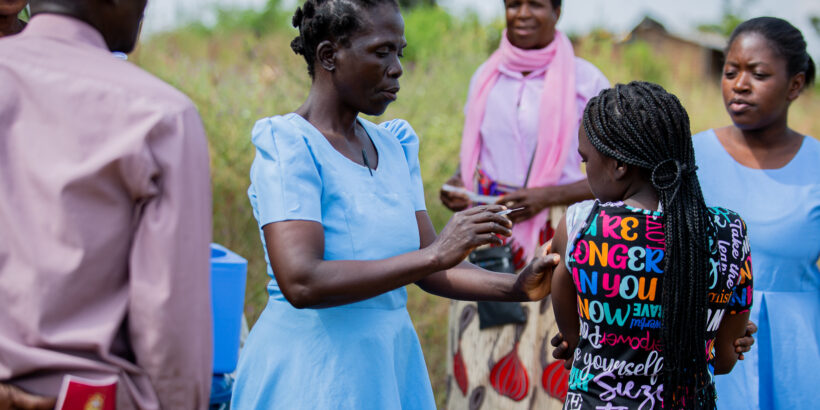
Cover photo: A vaccinator in Malawi delivers typhoid conjugate vaccine (TCV) during the country’s TCV introduction campaign in 2023. The campaign occurred shortly after Cyclone Freddy, which damaged infrastructure and overwhelmed sewage systems. The Government of Malawi and partners moved forward with the TCV campaign, recognizing the urgency to protect children against typhoid, particularly in the wake of a damaging cyclone. Credit: TyVAC/Madalitso Mvula.