
Pour lire ce blog en français, veuillez cliquer ici.
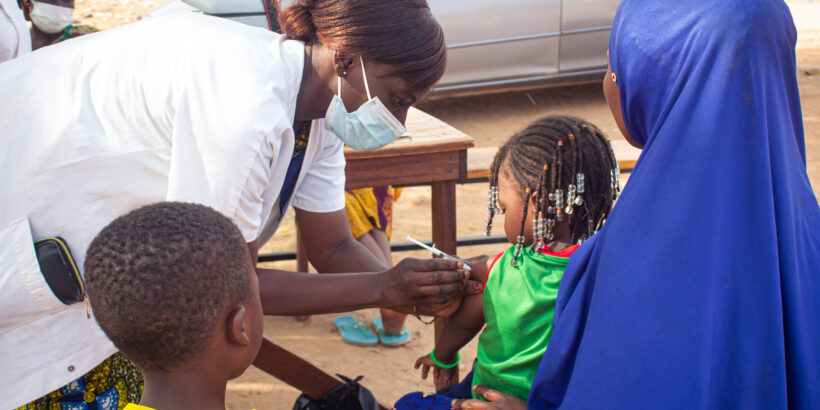
In January 2025, Burkina Faso conducted a national vaccination campaign against typhoid fever, reaching more than 10 million children aged between 9 months and 14 years with typhoid conjugate vaccine (TCV). This important initiative marked a significant milestone in the efforts against typhoid, which particularly affects children. Behind this success lies a key question for decision-makers: what is the cost of a vaccination campaign and what influences these costs?
To answer these questions, the Burkina Faso Ministry of Health, Davycas International, and PATH carried out a cost analysis. The analysis used data from all levels of the health system to document the resources mobilized for campaign implementation.
The price of campaign success
Financial costs correspond to the expenses to implement the vaccination campaign, which include daily allowances paid to staff, transport costs such as fuel purchases or vehicle rentals, supplies, and printing and communication costs. These costs reflect the direct impact of the campaign on the health system budget.
Economic costs account for the resources mobilized, including healthcare staff and volunteer labor, existing equipment, and non-financial contributions made as part of the campaign. This approach captures the full cost of delivering the campaign, including resources such as healthcare workers’ time and existing equipment, even when no money is directly spent on them.
On average, the financial cost of delivery (excluding the purchase of vaccines) was US$0.47, and the economic cost was US$2.16 per dose administered in Burkina Faso. More importantly, the financial cost fell within Gavi, the Vaccine Alliance’s support limits at the time, confirming the economic and financial effectiveness of this campaign in early 2025. However, these estimates hide a more complex reality.
Reaching populations at a cost
One of the key lessons learned is that equitable access to vaccination requires different approaches, and therefore varied costs.
- The widely used mobile and temporary post strategy, which is how approximately half of the vaccinated children in Burkina Faso were reached, identifies schools, markets, or hard-to-reach areas to vaccinate eligible children. However, this strategy requires more human resources, time, and logistics compared to fixed delivery and outreach at regular posts. As such, the economic cost is higher at mobile and temporary sites: US$2.02 per dose as compared to US$1.89 economic costs at fixed sites, reflecting the true cost of the resources mobilized to reach children in specifically designated campaign sites.
- The outreach at regular posts presents a different dynamic. While it generally requires fewer economic resources than mobile and fixed approaches, it recorded the highest financial cost per dose (approximately US$0.41). One likely explanation is that fewer doses were delivered through this strategy, reducing the potential for economies of scale.
Reaching children in hard-to-reach or underserved communities requires additional resources, but without these investments, many children would remain unreached and unvaccinated.
Significant geographic differences
Costs also varied considerably across geographic settings. Financial costs per dose were higher in rural areas than in urban areas, reflecting the additional operational effort required to reach remote communities. Longer travel distances, more complex logistics, and in some cases security challenges can increase the financial resources needed to deliver vaccination services. Similar patterns were observed across regions, where financial costs per dose varied from US$0.63 per dose in the East region to US$0.39 in the North region. These findings highlight an important reality: ensuring equitable access to vaccination often requires specific investments to reach the most underserved or difficult-to-access communities.
The central role of human resources
The study highlights that human resources account for nearly 78 percent of economic costs, while daily allowances make up a large proportion of financial costs. Vaccination is a labor-intensive activity, relying on the mobilization of health workers, supervisors, and vaccination teams. Furthermore, two activities account for a large proportion of the costs: vaccine administration itself (37 percent) and community engagement (22 percent).
The prominence of community engagement is particularly noteworthy. Informing communities, addressing vaccine hesitancy, and engaging local leaders require substantial investments. These activities are essential to ensuring vaccine uptake and maximizing the impact of vaccination campaigns. Rather than representing an additional expense, these resources are a critical investment in campaign success.
Opportunities to improve campaign performance
Beyond the costs, the study highlights opportunities for improvement. Many campaign expenses, such as planning, community engagement, supervision, and travel, are incurred regardless of how many children are vaccinated. As a result, facilities that reach larger numbers of children can spread these costs across more doses, reducing the cost per dose and benefiting from economies of scale. This emphasizes the importance of effective operational planning to maximize the number of children reached during campaign activities. By spreading fixed costs such as training, supervision, community engagement, and travel across more doses, programs can improve efficiency while strengthening systems that can support future routine immunization activities. Some expenses, centralized data management, for example, could be optimized through digitalization, thereby reducing costs associated with printing and manual processing.
Adapting delivery strategies to local contexts can help ensure that resources are used where they have the greatest impact. Investing in human resources can strengthen one of the campaign’s most important cost drivers, while targeted support for rural and hard-to-reach areas can help address the higher delivery costs associated with reaching underserved populations.
Conclusion
By generating evidence on the costs of delivering TCV at scale, this study provides valuable insights for future immunization planning in Burkina Faso and beyond. The findings highlight that different delivery strategies come with different resource requirements and that reaching underserved populations often requires additional investment. As countries introduce new vaccines, understanding these costs can help policymakers select the most appropriate delivery approaches for their context, allocate resources more effectively, and maximize the reach and impact of vaccination programs.
Cover photo: A health worker delivers TCV to a child in Burkina Faso during the country’s January 2025 TCV introduction campaign. Credit: TyVac/Build Africa Communications.