
Vaccines work—but they do not work on their own. For every generation protected, there are heroes and heroines whose courage, commitment, and quiet determination make immunization possible. In Kenya, that truth was vividly demonstrated in July 2025, when the country achieved an extraordinary milestone: more than 16.6 million children vaccinated with typhoid conjugate vaccine (TCV) and 5.4 million with measles-rubella (MR) vaccine in just ten days.
It was one of the most ambitious immunization campaigns in Africa’s recent history. Yet behind the impressive numbers lies a deeper and more powerful story—of caregivers who chose trust over fear; healthcare workers who went far beyond duty; community health promoters who opened doors and dispelled doubt; fathers who stepped forward; and scientists whose years of research made protection possible. Together, they show us why, for every generation, vaccines work.
Courage begins at home
For vaccines to work, they must first be accepted—and that acceptance often begins at home. Take the story of Jessica (not her real name), a nine-year-old pupil in a public primary school in Nairobi. Her mother, influenced by misinformation, initially refused to allow her daughter to be vaccinated.
After watching her classmates confidently roll up their sleeves—laughing, comparing bandages, and cheering one another on—Jessica found her voice. That evening, she pleaded with her mother, explaining what she had learned and what she had seen at school. Moved by her daughter’s conviction, her mother relented. The next day, Jessica received her TCV.
Across Kenya, millions of similar moments unfolded quietly in homes and communities. Each decision mattered. Each one helped ensure that vaccines work, not just in policy documents, but in the lived reality of children’s lives.
Community trust: Opening pathways to protection
In many communities, access to immunization is not just about availability; it is about trust. Rose Ogutu, a 65-year-old former traditional birth attendant who became a community health promoter in Nairobi, understands this deeply. During the campaign, she found herself in a different arena: persuading hesitant head teachers to open their school gates to vaccination teams.
Drawing on decades of cultural knowledge, lived experience, and deep community trust, Rose patiently addressed concerns and dispelled fears. Through dialogue and persistence, she convinced even the most skeptical leaders, ensuring that hundreds of children were reached safely within school settings.
For every generation, vaccines work because trusted community figures bridge systems and families—translating science into understanding and reassurance into action.
Fathers stepping forward: Redefining responsibility
One of the most powerful—yet often overlooked—drivers of immunization success is male involvement. Across Kenya, fathers demonstrated that protecting children’s health is not solely a mother’s responsibility, but a shared commitment.
In an urban community, Joy’s father became a quiet but influential champion. Rather than leaving vaccination decisions to others, he personally took his daughters to the vaccination post. He spoke openly with other men in his community, reminding them, “Our children’s health is our responsibility too.” His leadership not only ensured his own children were protected, but also helped challenge longstanding gender norms about parenting and healthcare.
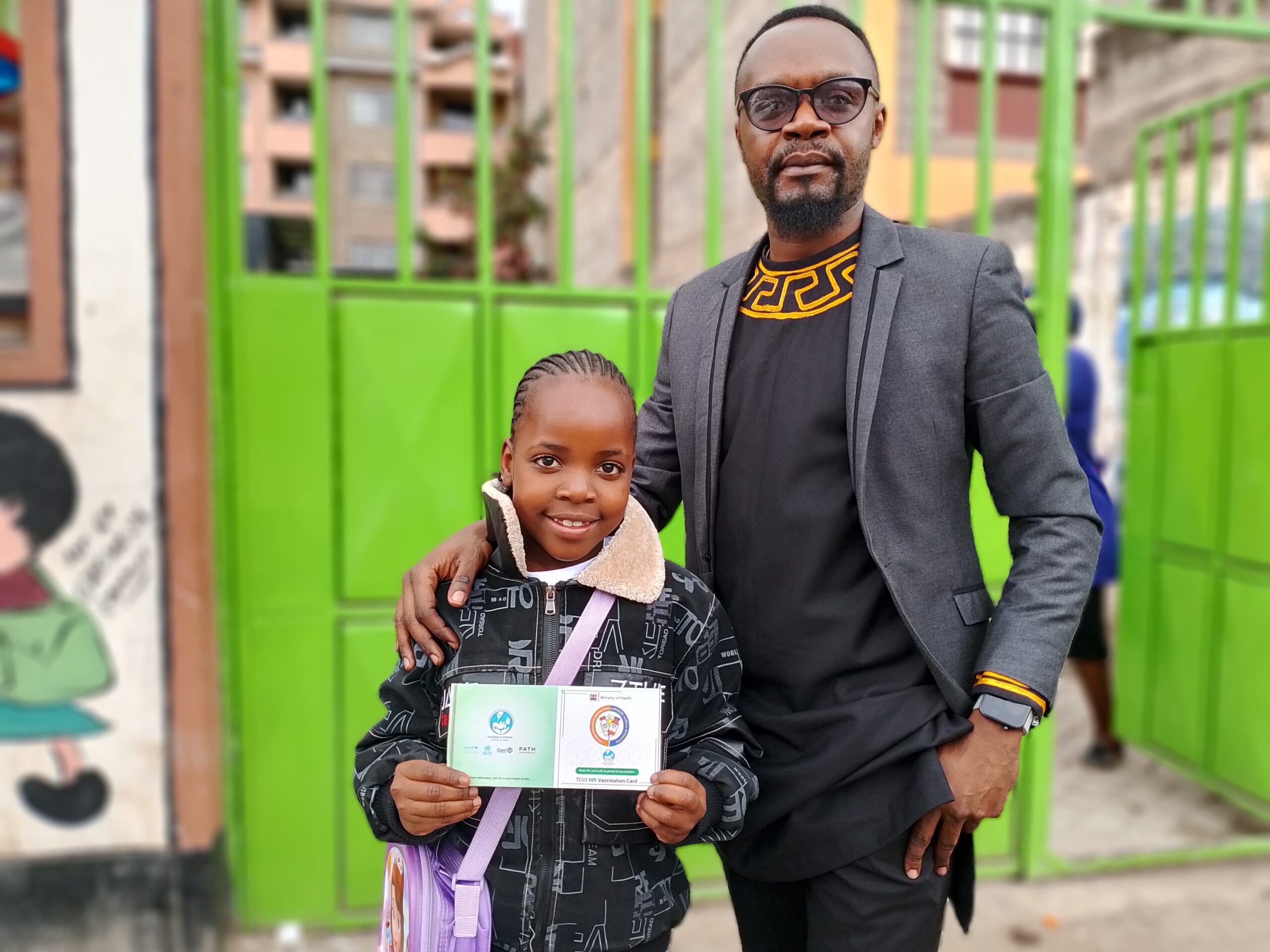
Photo: Nine-year-old Joy was one of the millions of Kenyan children who received the typhoid conjugate vaccine (TCV) during Kenya’s TCV introduction campaign in July 2025. Credit: PATH/Peter Abwao.
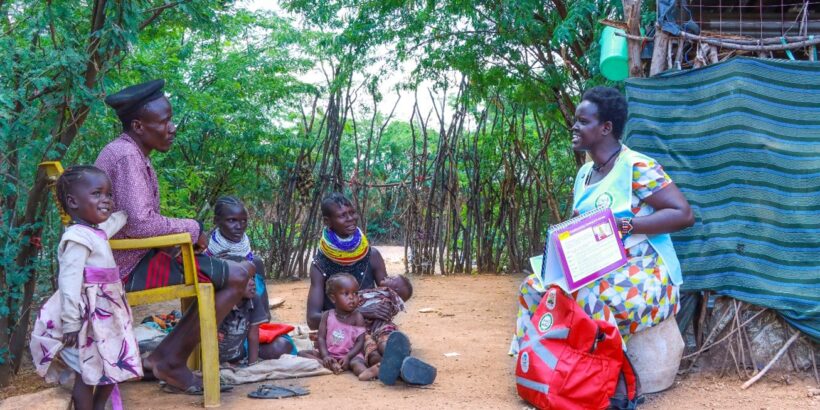
In Turkana County, male involvement took the form of consistent, everyday support. Lupeyo, a father from Kakuma, Turkana, described how immunization became a joint responsibility in his household. While his wife takes their child to the clinic, he supports her by ensuring transport is available, reminding her of appointment dates, and planning family schedules around vaccination visits. When a dose was missed, their Community Health Promoter followed up promptly, helping the family return to the facility.
“Immunization is not just a woman’s job,” Mr. Lupeyo says. “When men support their wives—through reminders, encouragement, or resources—we protect our children better.”
These practical acts of partnership, replicated across communities, show how fathers help vaccines work beyond the clinic.
Leaving no child behind
A defining achievement of the campaign was reaching more than 74,000 zero-dose children—children who had never received a single vaccine before. For them, this was more than another immunization activity; it was their first step into the health system and toward a healthier future.
Reaching these children required determination, community mapping, follow-up, and trust. It was equity in action—affirming that no child is too remote, too marginalized, or too forgotten to be protected.
Health care workers: The backbone of every generation protected
At the heart of the campaign were health care workers whose grit and compassion turned plans into impact. In Kisumu County, Winnie Ocheche faced a trial by water. Flooded terrain cut off access to entire communities. Refusing to let geography dictate children’s futures, she waded through a swollen river with her vaccine carrier held high above her head. On the other side, children and caregivers were waiting. That single act of determination ensured protection that no storm could wash away.
Across classrooms, churches, playgrounds, and remote villages, health care workers showed that vaccines work because people refuse to give up.
Progress, gaps, and the road ahead
Today, Kenya’s immunization coverage stands at approximately 84 percent across all antigens as of December 2025—a strong indicator of progress built through years of partnership, planning, and commitment. Yet national averages can mask persistent disparities. Children in remote areas, informal settlements, nomadic communities, and fragile settings are still more likely to miss lifesaving vaccines.
Acknowledging these gaps does not diminish Kenya’s success—it sharpens our resolve. Because it is the very heroes celebrated in this story—the caregivers, fathers, community health promoters, nurses, scientists, and policymakers—who will help close these gaps and move the country closer to universal coverage.
“This campaign proved that no child is too far, and no community too hard to reach when we act together to protect our children’s future,” observed Dr. Rose Jalang’o, Head of the National Vaccines and Immunization Program.
A story for every generation
Kenya’s immunization journey is more than a public health success. It is a living demonstration of what trust, courage, and collective responsibility can achieve. In just ten days, the country showed that when families choose confidence, communities choose dialogue, and systems choose equity, vaccines truly work—for this generation and the next.
As PATH, a core partner of the Typhoid Vaccine Acceleration Consortium, we are proud to have stood with the Government of Kenya, county governments, partners such as WHO, UNICEF, Gavi, the Vaccine Alliance, AMREF, the Kenya Red Cross, healthcare workers, community leaders, and families in this extraordinary effort. Every child protected from a vaccine-preventable disease is a step forward in advancing health equity and saving lives.
For World Immunization Week – and always – Kenya’s message is clear: for every generation, vaccines work—because people make them work.
Cover photo: Lupeyo, a father from Kakuma, Turkana, Kenya, and a community health promoter during a household visit. Credit: PATH/Artful Eyes.