
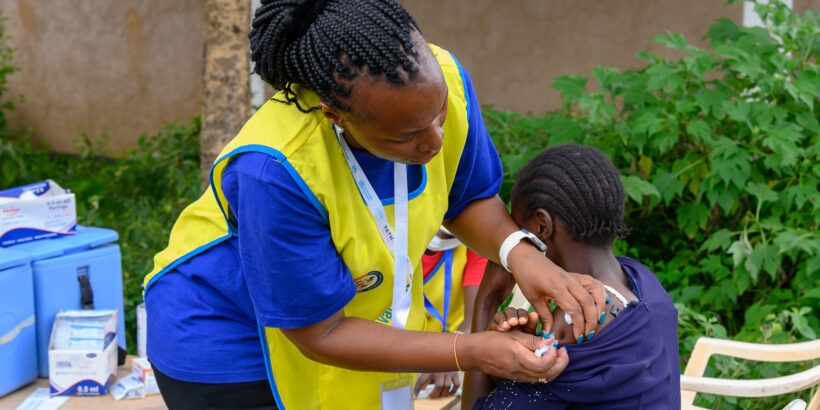
While typhoid vaccines for travelers visiting areas where typhoid is endemic have been available since the 1980s, the last decade has introduced an exemplary new tool to protect those most at risk: typhoid conjugate vaccines (TCV). Globally, children younger than 15 years old bear the highest burden—and risk—of typhoid. TCVs are safe and effective for children as young as 6 months of age and a single dose provides strong protection for at least 4 years.
What makes TCVs different
In 2017, the World Health Organization (WHO) prequalified the first TCV, and in 2018 it recommended the use of TCV in endemic countries, while Gavi, the Vaccine Alliance included it in the list of funded vaccines. These milestones marked a turning point for typhoid control, creating an opportunity to reach a new generation of children with safe and effective typhoid vaccines. In the past eight years, three additional TCV products have received WHO prequalification.
TCVs are preferentially recommended by WHO because they require only a single dose, are suitable for younger children, show improved performance compared to their predecessors, and fit well within the Expanded Program on Immunization (EPI) schedule. WHO has prequalified four TCVs, two of which are eligible for support from Gavi.
Typhoid vaccines have existed for decades, but prior to 2018, they were not eligible for Gavi funding. Thus, low-income countries could not receive fiscal support to introduce them into the routine immunization schedule. TCVs changed that—offering a chance to provide this lifesaving tool more equitably in the communities that need it most. Today, nine Gavi-eligible countries have introduced TCV into their routine immunization schedules: Bangladesh, Burkina Faso, Kenya, Liberia, Malawi, Nepal, Niger, Pakistan, and Zimbabwe.
Protecting the next generation
With major challenges like drug resistance, extreme weather, conflict, and displacement on the rise, introducing TCV in typhoid-endemic countries is more critical than ever. To date, nearly 150 million children have received TCV as part of introduction campaigns, along with millions more in routine immunization. These children are part of a new generation with better protection from typhoid, which means more opportunities for them to grow, learn, and thrive.
TCVs don’t just benefit children; they also benefit parents and caregivers who might otherwise miss work or face heavy medical expenses due to typhoid disease. And TCVs are effective against drug-resistant typhoid, which means they can help prevent the spread and emergence of drug-resistant strains—preserving existing treatment options for everyone.
Additionally, progress on introducing TCVs must be accompanied by investments in water, sanitation, and hygiene (WASH). TCVs can help protect children in the near term, while improvements in WASH infrastructure can help provide safe water to communities for generations to come.
In the last decade, we have witnessed enormous progress in typhoid control with TCVs. We need to continue this progress and protect the next generation from this preventable disease.
Cover photo: A health care worker delivers TCV during Kenya’s TCV introduction campaign in July 2025. Credit: TyVAC/Martin Mwangi.