
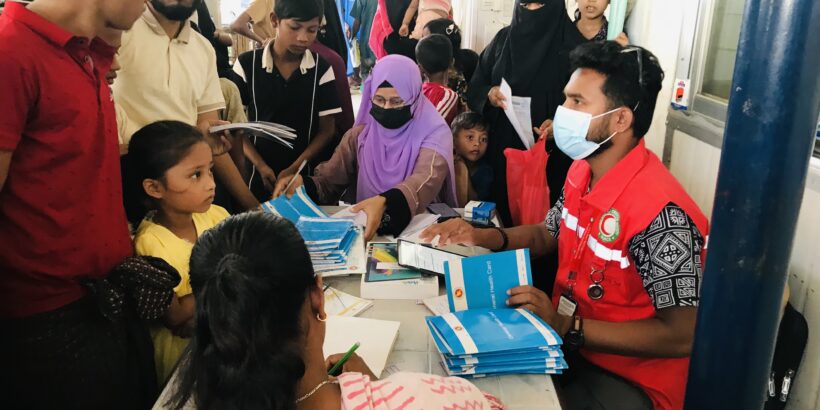
Today, more than 117 million people worldwide are forcibly displaced, driven from their homes by conflict, climate change, extreme weather, and other disruptions. Many refugees are not just geographically uprooted, but also lose access to adequate health care, education, and other basic services. In this reality, refugees and internally displaced persons (IDPs) need support—and that includes protection from infectious disease.
Displacement and disease
In conflict and displacement settings, most deaths result not from direct violence but rather from a breakdown in health services, public health systems, and social conditions that turns treatable illnesses into preventable disability and death. Many refugees lack reliable access to safe water, sanitation, and hygiene (WASH), and overcrowded settlements create conditions where waterborne diseases like typhoid can spread quickly. Climate change is intensifying this challenge, with floods, droughts, and extreme weather both displacing communities and putting WASH infrastructure under strain.
For children living through displacement, preventing disease is incredibly important. A child in a refugee camp today may move tomorrow, making consistent access to health care unpredictable. This uncertainty makes prevention more difficult—and more urgent.
Reaching children where they are
Standing in solidarity with refugees means getting them the health care they need, regardless of borders or location. Bangladesh, which introduced typhoid conjugate vaccines (TCVs) in October 2025, put this principle into practice. The country’s introduction campaign included a dedicated phase to reach Rohingya children living in Cox’s Bazar, one of the world’s largest refugee settlements.
Through the leadership of the Government of Bangladesh and partners, as well as the tireless efforts of health workers and vaccinators, the campaign reached 410,345 Rohingya children with TCV, for a total of 86 percent coverage in Cox’s Bazar. TCVs provide long-lasting protection against typhoid, and the campaign in Cox’s Bazar marked an important step toward reducing the burden of disease in a highly vulnerable population.
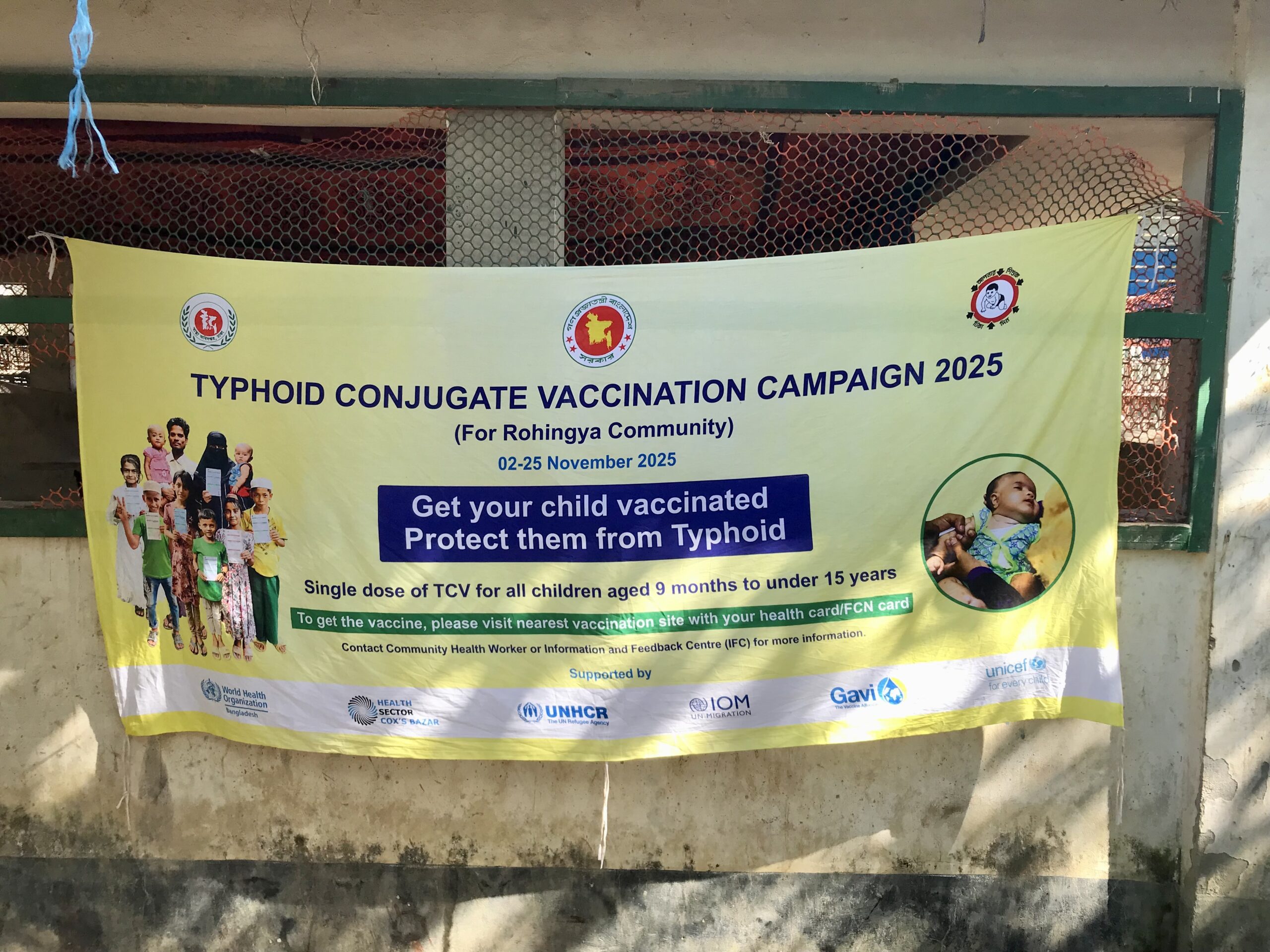
Photo: A banner advertising Bangladesh’s TCV introduction campaign, which included a targeted phase for reaching Rohingya refugees in November 2025. Credit: TyVAC/Muhibul Kashem.
Protection in an uncertain world
Bangladesh’s TCV campaign shows what solidarity looks like in practice: coordinated action and a focus on reaching those most at risk. Encouragingly, each of the other three countries that introduced TCV last year—Burkina Faso, Kenya, and Niger—also reached populations affected by displacement, as have many of the countries with earlier TCV introduction campaigns. These efforts reflect a growing recognition that immunization strategies must adapt to the realities of today’s world.
World Refugee Day reminds us that displacement should not determine a child’s health or future. Protecting refugees and displaced communities from preventable diseases like typhoid is possible—but it will require sustained investment in vaccines, WASH, and essential services for those most at risk.
Cover photo: Vaccinators and campaign workers deliver TCV to Rohingya refugee communities in Cox’s Bazar, Bangladesh, in November 2025. Credit: TyVAC/Muhibul Kashem.