
We now have strong evidence that typhoid conjugate vaccines are safe and effective, protecting children and communities in typhoid-endemic settings.
The question in front of the field is how to translate that protection into lasting, equitable population-level impact while expanding introduction in countries and communities that continue to bear the greatest burden. That is the focus of the 14th International Conference on Typhoid and Other Invasive Salmonelloses. This year’s meeting, Innovation and Equity: Shaping the Future of Typhoid and Other Invasive Salmonelloses, will bring more than 250 researchers, policymakers, and health experts to Phnom Penh, Cambodia, March 24 to 26, 2026.
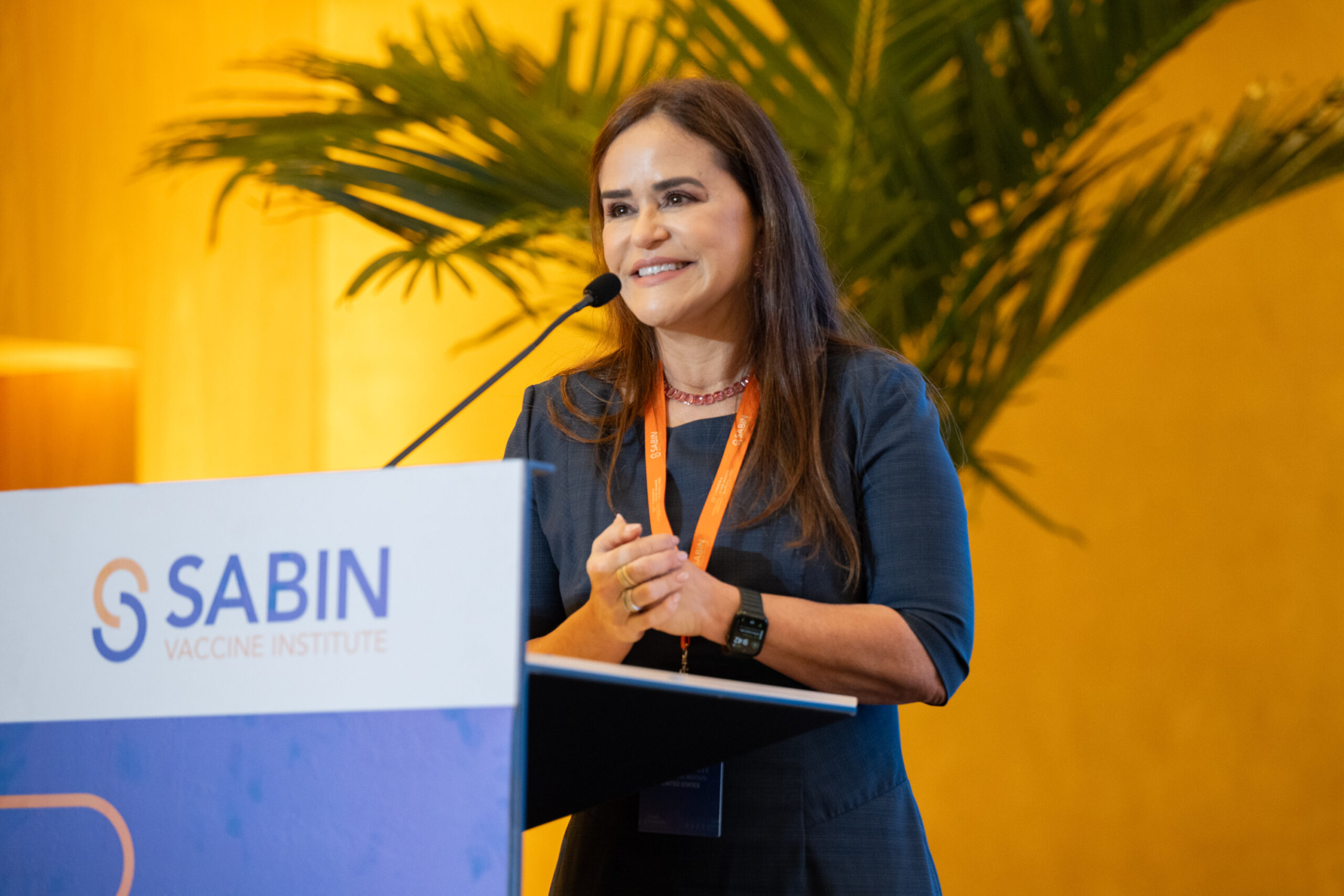
Photo: Denise Garrett at the 13th International Conference on Typhoid and Other Invasive Salmonelloses in Kigali, Rwanda. Credit: Sabin Vaccine Institute.
New data and priorities
Over three days, participants will share new data and debate priorities across the full typhoid and other invasive salmonelloses prevention agenda, from vaccine impact and implementation strategies to diagnostics, surveillance, antimicrobial resistance, and the essential role of water, sanitation, and hygiene (WASH). The program reflects where the field is today: building on strong evidence of protection and focusing on how to deliver, measure, and sustain impact at scale, in the places that need it most.
The program highlights how new tools are strengthening the evidence base for action. Sessions will feature advances that move beyond any single approach, combining clinical data with innovations such as seroepidemiology, environmental surveillance, and improved analytics to better target interventions, track vaccine impact, and identify where gaps remain. The agenda also includes progress on improved diagnostics and immunology that can inform vaccine development and evaluation.
The conference also focuses on the decisions that determine real-world impact. Presentations will share lessons from country introductions and vaccine effectiveness studies, including practical questions such as introduction strategies, target age groups, and where additional doses might add value. Discussions will also look ahead to the broader vaccine pipeline, including combination vaccines and multivalent approaches that could protect against multiple enteric diseases, including Salmonella Typhi and Salmonella Paratyphi A.
Continuing threats
The program keeps a clear focus on the threats that make the need for progress urgent. Sessions on antimicrobial resistance, genomics, and resistance patterns will examine how resistant lineages are emerging and spreading, and what that means for clinical care and public health strategy. A plenary on integrated prevention underscores that long-term control depends on approaches that extend beyond vaccines, including WASH and the realities of environmental and climate risk. Finally, the conference looks ahead to what it will take to sustain momentum and scale impact against typhoid and other invasive salmonelloses NTS. The closing panel will take a forward-looking view of how we collectively translate progress into lasting, equitable impact through research, policy, and implementation.
This conference happens every other year to take stock of progress and set direction for what comes next. This year, the message is clear: we have an effective vaccine, and we have a growing set of complementary tools. The work now is to connect innovation with measurable, equitable impact for the communities that have carried the burden of typhoid and other invasive salmonelloses for far too long.
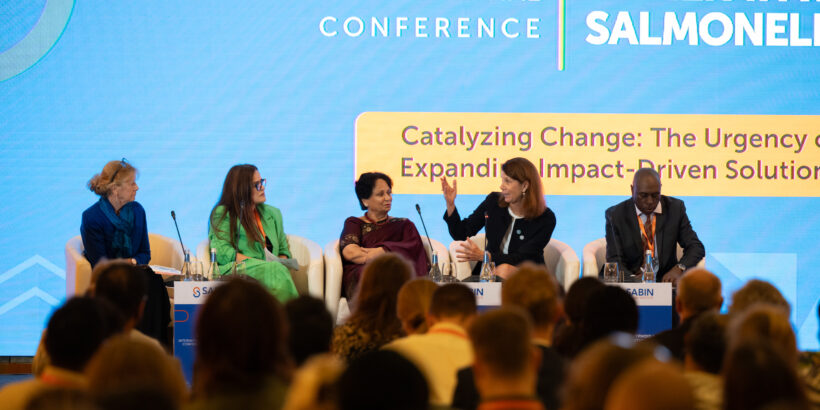
Cover photo: Panel discussion at the 13th International Conference on Typhoid and Other Invasive Salmonelloses in Kigali, Rwanda. Credit: Sabin Vaccine Institute.
This blog was originally posted by Sabin Vaccine Institute.