
Pour lire ce blog en français, veuillez cliquer ici.
Recent flooding brought on by torrential rains has affected hundreds of thousands of people across Mozambique, South Africa, and Zimbabwe. In Mozambique, more than 300,000 people have been displaced in the province of Gaza with many more forced to evacuate across the rest of the country.
Not only do floods force people from their homes and damage buildings, roads, and farmland, they also put access to clean water, sanitation, and hygiene (WASH) at risk. Storms can damage WASH infrastructure, leading safe water sources to become contaminated with pathogens that cause typhoid, cholera, and diarrhea. Additionally, people who are displaced by floods may lose access to reliable water and sanitation services.
The link between flooding, climate change, and disease
Climate change is increasing the frequency and intensity of extreme weather events. A recent analysis of the floods in southern Africa by climate scientists found that climate change worsened the intensity of the flooding. Higher temperatures compounded the effects of the La Nina weather phenomenon, which brought wetter conditions to the region.
In recent years, several other countries have faced flooding or extreme weather events that damaged WASH systems:
- Kenya: In April and May 2024, heavy rains and flash flooding in Kenya displaced thousands of families and caused catastrophic damage.
- Bangladesh: In May 2024, Cyclone Remal affected 6 million people across the country, with more than 800,000 people forced to evacuate due to flooding, high winds, and storm surges.
- Pakistan: In 2022, massive floods in Pakistan overwhelmed WASH infrastructure and led to outbreaks of waterborne diseases, including typhoid.
As extreme weather becomes more common around the world, disease prevention has never been more critical. When disasters hit, preventive interventions like typhoid conjugate vaccines (TCV) (and oral cholera vaccine and rotavirus vaccines) serve as an early defense against disease outbreaks. And when more children are vaccinated against typhoid and other diarrheal diseases, transmission drops and communities stay healthier—even in the wake of severe weather.
Nearly 150 million children have received TCV as part of introduction campaigns, including in Bangladesh, Kenya, and Pakistan. But we can’t stop here. In the face of climate change and extreme weather, protecting children against waterborne diseases like typhoid is essential.
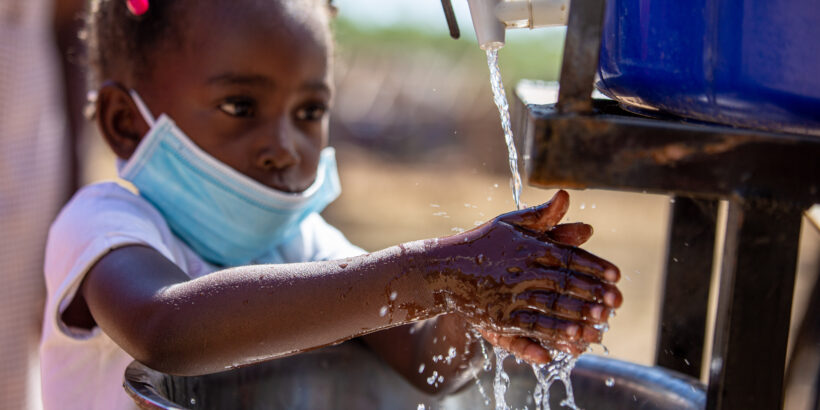
Cover photo: A girl washes her hands during Zimbabwe’s TCV introduction campaign in 2021. Credit: TyVAC/Kudzai Tinago.